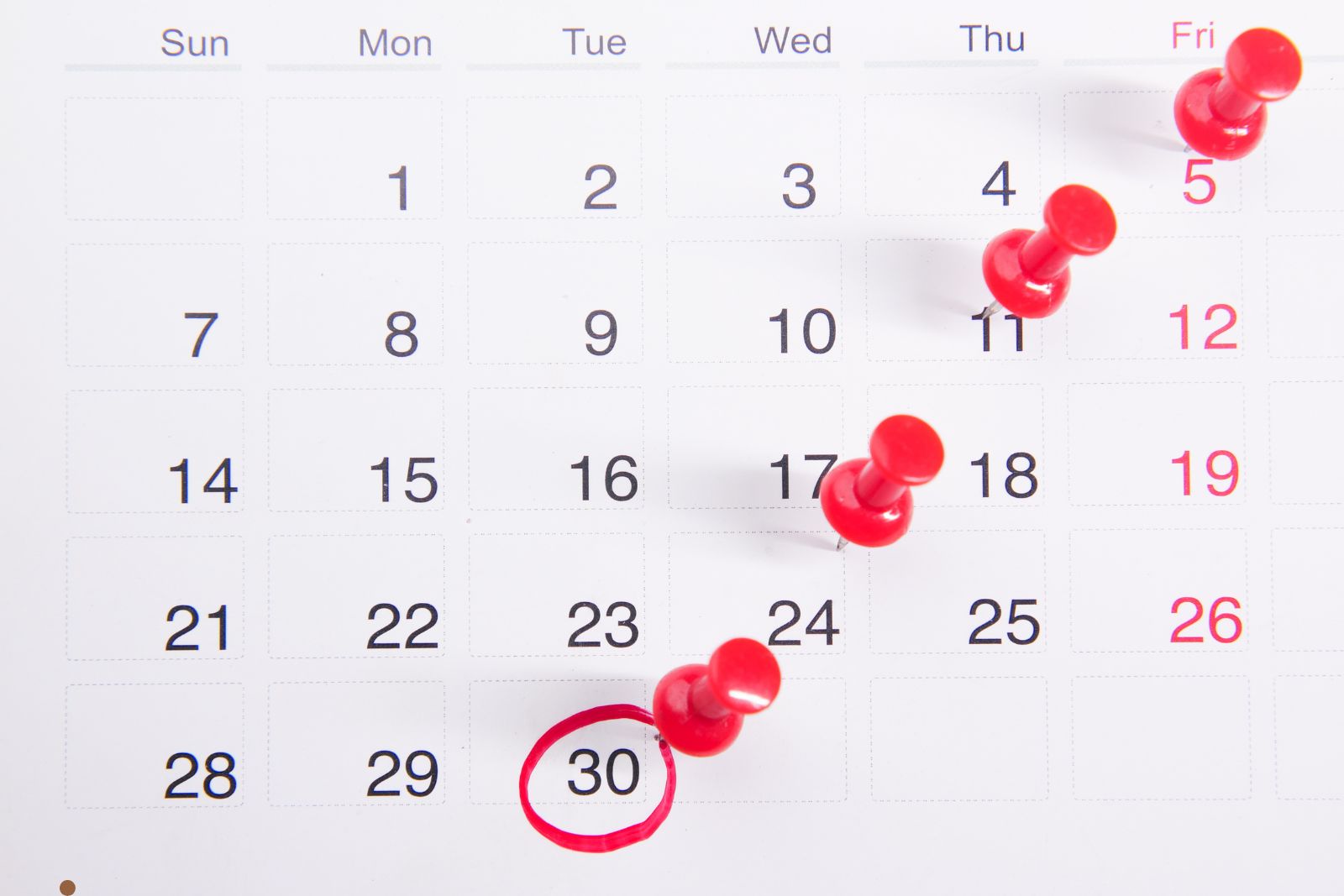
You scheduled the appointment. The lead confirmed. Your team blocked time, prepared materials, and waited. Then nothing. No call. No message. No cancellation. Just silence. If this sounds familiar, you're not alone.
Across industries, appointment no-shows are one of the most expensive and persistent problems in business. Healthcare loses an estimated $150 billion annually to missed appointments. Financial services firms see 15 to 25% of scheduled consultations evaporate. Home services companies report that 20 to 30% of booked jobs never happen.
The frustrating part is that the fix has been known for years. Healthcare figured it out over a decade ago. And it's remarkably simple.
The no-show problem by the numbers
No-shows aren't a niche issue. They affect virtually every industry that relies on scheduled interactions with customers or clients.
These numbers represent more than lost time. Every no-show carries a compounding cost: the labor allocated to serve that appointment, the marketing spend that generated the lead, the revenue from other prospects who could have filled that slot, and the follow-up cost of trying to rebook.
For a financial services firm booking 50 consultations per week with a 20% no-show rate, that's 10 wasted appointment slots every week, or 520 per year.
Why people don't show up
The instinct is to blame the lead. They're flaky. They weren't serious. They're just window shopping. But the data tells a more nuanced story. Most no-shows aren't intentional. They're the result of predictable psychological and logistical patterns.
Forgot entirely. This is the biggest single driver. The further the appointment is from the booking moment, the more likely the person is to simply forget it exists. A consultation booked on Monday for Thursday has a much higher no-show risk than one booked for the same day.
Something came up. Life intervenes. Work emergencies, childcare issues, car trouble. The appointment was real when they booked it, but competing priorities won when the day arrived.
Changed their mind but felt awkward canceling. This is more common than most businesses realize. The person decided against the appointment but didn't want to have the uncomfortable conversation of canceling. Ghosting felt easier.
Never intended to keep it. A smaller percentage (typically under 10%) booked the appointment to end a sales conversation or under social pressure, with no real intention of attending.
Logistical confusion. Wrong time zone, misremembered the date, couldn't find the address or call-in link. Simple friction that adds up.
The average no-show costs a business far more than just the lost appointment. It's wasted prep time, a blocked calendar slot, and a lead that grows colder by the hour.
The commitment decay curve
There's a measurable pattern to how commitment deteriorates between booking and appointment time. Researchers call it the "commitment decay curve," and it explains why the gap between scheduling and attending is where most appointments die.
The pattern is clear: commitment drops sharply in the first 24 to 48 hours, then continues declining at a slower rate. By the time a week has passed since booking, nearly two-thirds of the original commitment has eroded.
This isn't because the person doesn't want what you're offering. It's because the urgency that drove them to book has faded, other priorities have filled their attention, and the appointment has become just another item on a crowded to-do list.
The fix that healthcare figured out years ago
Hospital systems, dental practices, and medical clinics solved this problem over a decade ago. The solution is disarmingly simple: send a confirmation text message before the appointment.
The data is overwhelming.
A meta-analysis of 29 studies published in PLOS ONE found that text message reminders reduced no-show rates by an average of 34%. The most effective approach was a message sent 24 hours before the appointment with a second reminder 1 to 2 hours before. Studies consistently show that messages offering an easy way to confirm, reschedule, or cancel outperform simple reminders alone.
Why does something this simple work so effectively?
It re-establishes the commitment. The act of reading the reminder and mentally confirming "yes, I'll be there" recreates the commitment that has decayed since booking.
It provides a graceful exit. When the message includes an easy way to cancel or reschedule, people who've changed their minds will use it rather than ghosting. A known cancellation is vastly better than a no-show because you can fill the slot.
It handles the "I forgot" problem directly. For the 34% who simply forgot, the reminder is the entire fix.
It resolves logistical confusion. Including the time, date, and any relevant details (phone number, video link, address) eliminates friction.
What the best confirmation messages look like
Not all reminders are created equal. The difference between a message that reduces no-shows by 10% and one that reduces them by 40% comes down to a few specific elements.
Effective elements
Personalization. Use their name and reference the specific service or topic. "Hi Sarah, just confirming your mortgage consultation tomorrow" works better than "Reminder: you have an appointment tomorrow."
Specific details. Include the exact time (with timezone if relevant), the method (phone call, video, in-person), and any prep needed.
Easy response options. Give them a clear way to confirm, reschedule, or cancel with minimal effort. One-tap responses work best.
Conversational tone. Write like a helpful human, not an automated system. Skip the corporate language.
Sample confirmation messages by industry
Financial services:
"Hi David, confirming your call with James tomorrow at 2pm ET to discuss your loan options. Reply YES to confirm, or let me know if you need to reschedule."
Home services:
"Hi Mark, your HVAC inspection is scheduled for Thursday at 10am. Our tech Mike will call you when he's 15 min away. Reply YES to confirm or CHANGE to pick a new time."
Real estate:
"Hi Lisa, just confirming your showing at 742 Oak Street tomorrow at 4pm with Rachel. Reply YES to confirm. If something came up, no worries. Just reply RESCHEDULE."
Insurance:
"Hi Tom, quick reminder about your policy review with Sarah tomorrow at 11am. She'll call you directly. Reply YES to confirm or let me know if another time works better."

A well-timed text message is the single most cost-effective tool for reducing no-shows. It costs almost nothing to send and saves thousands in recovered appointments.
The optimal timing strategy
When you send the reminder matters almost as much as what you say. Research points to a two-touch approach as the most effective pattern.
First touch: 24 hours before. This gives the person enough time to plan around the appointment and serves as the primary reminder. It's also far enough out that if they need to cancel, you still have a chance to fill the slot.
Second touch: 30 to 60 minutes before. This catches the people who saw the first message but got distracted. It also serves as a final "get ready" signal. For phone appointments, this is especially effective because the lead is now primed to answer when the call comes.
For appointments booked more than 3 days in advance, an additional touch at the midpoint (for example, a Wednesday reminder for a Friday appointment booked on Monday) can further reduce decay.
The two-touch approach has been shown to reduce no-shows by 38% compared to single reminders, and by 45% compared to no reminders at all, according to a 2023 study in the Journal of Medical Internet Research.
Beyond reminders: building a no-show prevention system
Confirmation messages are the foundation, but the most effective businesses build a complete system around appointment integrity.
Make canceling easy. This sounds counterintuitive, but making cancellation frictionless actually improves your bottom line. A cancellation gives you time to rebook the slot. A no-show gives you nothing. When people feel trapped, they ghost. When they feel free to cancel, many will reschedule instead.
Reduce booking-to-appointment gaps. Where possible, schedule sooner. A 2-day gap has dramatically better attendance than a 2-week gap. If longer gaps are unavoidable, increase the number of reminder touchpoints.
Confirm the commitment at booking. Use language that creates a specific micro-commitment: "Great, I've locked in 2pm on Thursday for you. Sarah will call you right at 2." Specificity creates accountability.
Follow up on no-shows quickly. When someone doesn't show, a prompt, non-judgmental message within 30 minutes dramatically increases the chance of rebooking. "Hi David, we missed you for your 2pm call today. No worries at all. Want to reschedule for later this week?" This works because the guilt is fresh and the response feels understanding rather than accusatory.
Arnis handles this automatically through its Ask Again feature, which sends a well-timed follow-up after a missed appointment to re-engage the lead and reschedule, without requiring any manual effort from your team.
The ROI of fixing no-shows
For businesses hesitant to invest in confirmation systems, the math is compelling.
Consider a mid-size lending operation that schedules 200 consultations per month. At an average no-show rate of 20%, that's 40 missed appointments monthly. If 25% of attended consultations convert to a $3,000 average revenue event:
- 40 missed appointments per month
- At a 25% conversion rate, that's 10 lost sales per month
- At $3,000 average revenue, that's $30,000 per month in lost revenue
- Over a year: $360,000 in revenue that simply evaporated
A text reminder system that reduces no-shows by 35% would recover 14 of those 40 appointments monthly. At the same 25% conversion rate, that's 3.5 additional sales per month, or roughly $126,000 in recovered annual revenue. From text messages that cost pennies to send.
The bottom line
Appointment no-shows are not an unsolvable mystery. The causes are well understood: people forget, priorities shift, and canceling feels awkward. The fix is equally well understood: send a well-timed, well-written confirmation message that makes it easy to confirm, reschedule, or cancel.
Healthcare solved this problem years ago. Financial services, home services, real estate, and every other appointment-dependent industry can do the same.
The gap between knowing the fix and implementing it consistently is where most businesses fall short. Manual reminder calls don't scale. Remembering to text every lead 24 hours and 1 hour before their appointment is operationally impossible when you're managing dozens of appointments per day. That's where automation becomes essential, not optional.
"The most expensive appointment is the one your team prepared for but nobody showed up to. The cheapest fix is a text message."
Stop losing revenue to silence. The data is clear, the fix is simple, and the ROI is impossible to ignore.